Elvis Presley
CD and Vinyl

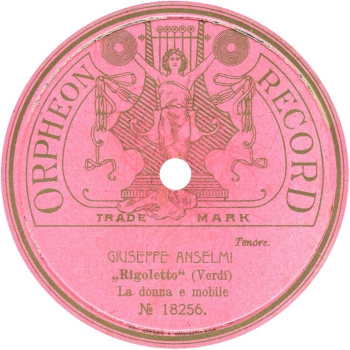
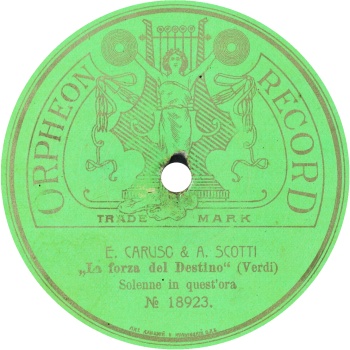
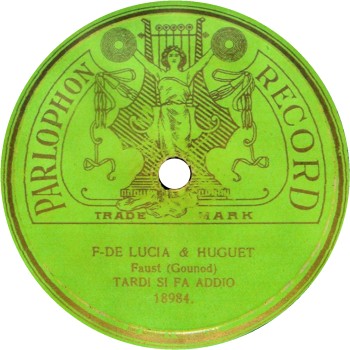
| Orpheon Record | ||||
| (Back To Russian Records List) | ||||
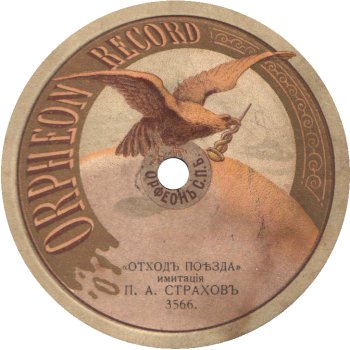
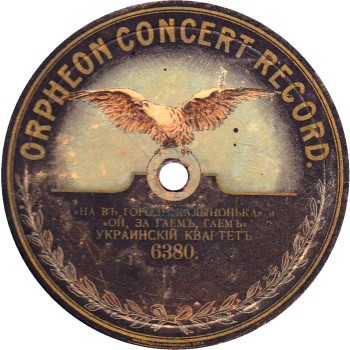
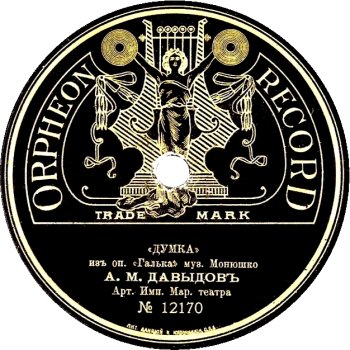
| In 1909, the records Horpheon Record appeared in the Russian
gramophone market. The repertoire of the new company was quite amazing.
These were the recordings of the most outstanding singers of that time:
E. Karuso, F.I. Shaalapin, etc.
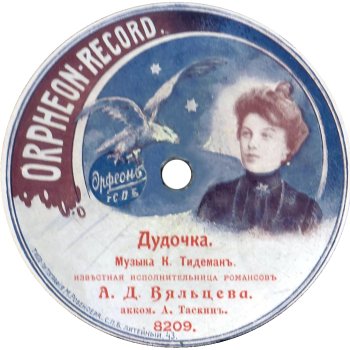
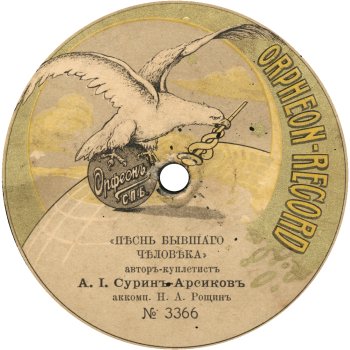
Soon, however, it turned out that this company simply reprinted ready-made records from the records of other firms, not spending a penny to pay for the fee to the performers. The number of 1032 items included in the "Orpheon" catalog, 864 were stolen from recordsGrammonephone. It also became known that the partnership Orpheon Record, which worked in St. Petersburg, was nothing more than a partnership that replaced his sign Melodyon, engaged in copying other peoples records. The orpheon put the case of copying on a wide foot and gave it the character of mass production. Gramophone firms, whose records were regularly censused, have repeatedly failed noisy processes, but the owner of Horpheon D.A. Finkelstein always managed to evaded responsibility, which was facilitated by the absence of copyright law in the record. In 1910, the State Duma began work on the first law On copyright. As soon as the contours of the future law began to be outlined, the orpheon partnership invested the proceeds from the sale of copied records in their own original records. The most famous of them are records with records of A.D. Vyaltseva. This was done in order to somehow give their activities a legal character. The progress was clearly propaganist and well-calculated, as soon the music community learned about the strange alliance of the Phone pirate number one orpheona with the Russian branch of the law-abiding American company Colombia. Her business in the empire was not very well, and she really wanted to move competitors. Surprising JSC Grammonophone there was no limit when it turned out that it was these two firms who presented to the Chairman of the State Duma before the second reading of the law On Copyright a petition in which they applied ... about the legislative defense of their industry! If you want to defend yourself, attack first. Soon the director of orfeon Finkelst-stein went even further. Through influential fake faces, he advised JSC Grammonophone buy a factory from him so that he would not be engaged in the production of pirated discs in the future. During the lengthy negotiations, a contract was prepared, in which the paragraph was clearly agreed. Despite this, "orpheon" immediately after the conclusion of the contract again began to counterfeed the records. He suspended his business only on March 20, 1911, when a new law was passed. The company was reorganized into the "New Joint Stock Company of Gramfones", but it was just a temporary sign for the reorganization period, since it did not issue any records. During the next 4 months, the company was pre-elected into"Russian Accionated Society of Gramophones"The official opening of which was announced on December 1, 1911. It was a really solid enterprise that existed until 1918. |
||||
 |
|
|
|
|
 |
 |
 |
 |
|
|
||||
 |
 |
 |
 |
|
|
||||
 |
||||
|
||||
|
||||
| |
||||
|
||||
|
||||
|
||||
|
||||
|
||||