
Elvis Presley
CD and Vinyl

Early British Disc Record Labels 1898 to 1926.
(Back To Early Records Alphabetical List)
 |
|
|
|
|
 |
 |
|||
|
||||
|
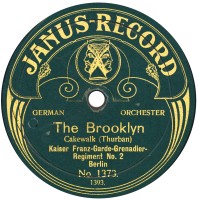
This German label company was granted a registered trade
mark in the U.K. in August 1912. As one would expect, the illustration
was of Janus, a senior Roman god with two faces – one looking forwards,
the other backwards, being the god of portals, and of beginnings. Therefore
it must have been the intention of the parent company (Vereinigte Schallplatten-werke
Janus-Minerva G.m.b.H.) to market discs over here, either directly, or
by appointing a British agent. Apparently they did not do so; at least, none have ever been found, but that is not quite the same thing. They may have just sent over some samples – who knows? Besides, a rumour persists that a few Janus records carry British recordings. In that case they would qualify for inclusion here on that ground alone. If there is a U.K. involvement it would be circa 1912-1914. |
||||
|
||||
|
 |
 |
 |
 |
|
||||
 |
 |
 |
 |
 |
|
||||
 |
 |
|||
| |
||||
|
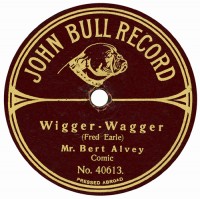
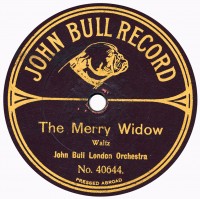
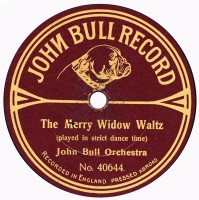
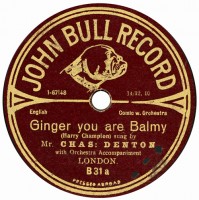
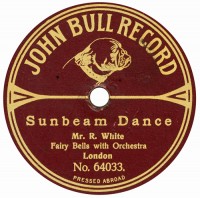
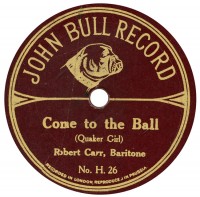
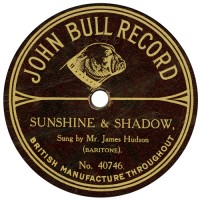
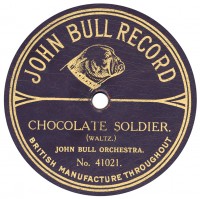
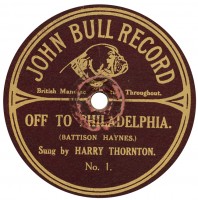
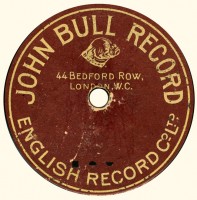
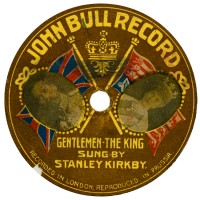
These records are common, and were sold from 1909 to
1913. They were not sold in shops, but door to door, by the ‘tallyman’
method. A salesman would call, and offer a gramophone on free loan for
a year, as long as the ‘borrower’ bought one record a week during that
time. The gramophone then became the property of the record buyer. The
catch was that the price of the discs was 2/6d (12.5p). This was expensive
at the time, and became even more so as the years passed. This, because
‘price wars’ soon raged, knocking the cost of good, well-made discs down
as low as 1/1d (5.2p). Indeed, many of the same masters that appeared on John Bull (always at 2/6d) were available on other makes at 1/6d and even below. The orthodox gramophone trade detested the John Bull and similar labels; not so much because they were fleecing the public, but because the tallymen had few if any overheads – e.g. no shop premises to rent. They were therefore competing with normal retailers by ‘unfair’ means. First made in Germany by Beka, that company was pressurised to stop doing so. They were then made by Favorite, and also made in the U.K. Their catalogue and face numbering is a minefield, as they sometimes held over the same number for re-recordings. There is one John Bull here remade by Favorite, where Favorite (usually a very meticulous company as to detail) have used the original Beka master number as their face number. The company history is also very complex, but in late 1913 ownership passed to the Albion Record Co. Still, in spite of all the ramifications, they certainly did manage to shift a lot of records – they turn up commonly to this very day, though the special commemorative 1910 King George V Coronation record is scarce. |
||||
|
||||
 |
 |
 |
 |
 |
|
||||
 |
 |
 |
 |
 |
|
||||
|
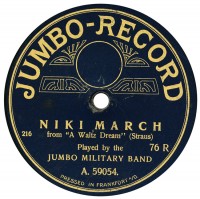
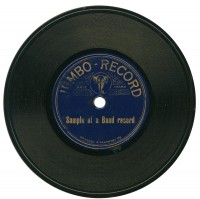
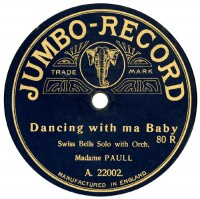
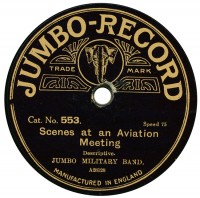
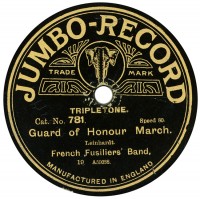
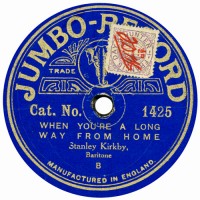
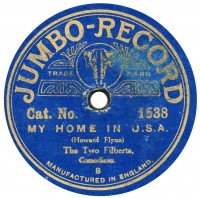
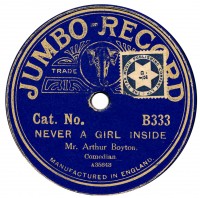
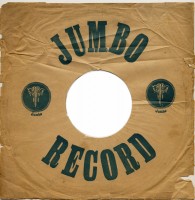
Jumbo records were enormously successful, and still turn
up from time to time. They appeared in this country in August 1908, and
became, in effect, a ‘budget label’ of Fonotipia; indeed, ‘MADE FOR THE
FONOTIPIA COMPANIES’ is pressed into the wax of many of them. Reference
work on other sites and sourcec, is really essential to understand the
rapid but complex changes that involved the various companies: Fonotipia,
Odeon and Jumbo – all of which were under the aegis of the Carl Lindström
concern by 1914. The first example has no elephant, because there was already a label in the U.K.called Elephone, which had, rather predictably, an elephant as a trade mark. But they folded in 1909, so the way was clear for Jumbo to take over the elephant trade mark, at least for gramophone records. They were firstly a product of the Jumbo Record Fabrik GmbH, located at Frankfurt an der Oder (not to be confused with the larger Frankfurt am Main). Only the very earliest were pressed at Frankfurt A/O. British issues (with local recordings too) were soon pressed here by Crystalate, and later at their own factory, which Lindström built at Hertford; hence ‘Manufactured in England’ is most usual on this label. On the outbreak of War in August 1914, the Lindström labels continued for some time, as they were produced by a properly constituted British Company. In 1916 the ‘Trading With The Enemy Act’ of 1914 was applied with increasing rigour, and the Hertford factory was taken over by the Board of Trade. It continued to produce discs under British control, though the Jumbo label was re-named Venus, and continued with the same catalogue series. |
||||
|
||||
|
||||