Elvis Presley
CD and Vinyl

Early British Disc Record Labels 1898 to 1926.
(Back To Early Records Alphabetical List)
 |
|
|
|
|
 |
 |
|||
|
||||
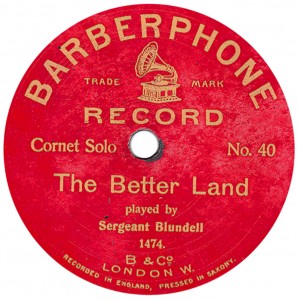
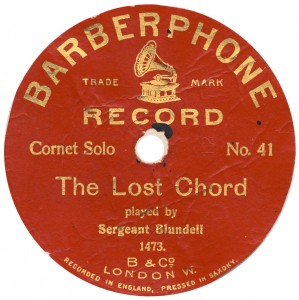
| Some time between 1912 and 1915, Gramophone retailer Walter Barber & Co., 115 Uxbridge Road, Shepherd’s Bush, London W, had records made for them. Two, or possibly three sorts are known. (1) Pressed by Kalliope in Saxony, (e.g. those above), from masters of Blum & Co., who had the Diploma, Pioneer and Victory &c. labels. (2) The Disc Record Co. in Harrow, Middx. might have pressed some Barberphones after the outbreak of the Great War (August 1914); these may or may not have master numbers in the same 1000 series. (3) Barber is also known to have bought up surplus stocks of records and over-stuck his own labels on them. The colour or shape of these labels is not known to us, However, Grammavox and Popular are known to exist over-stuck as Barberphones. All are very scarce. | ||||
|
||||
 |
 |
 |
||
|
||||
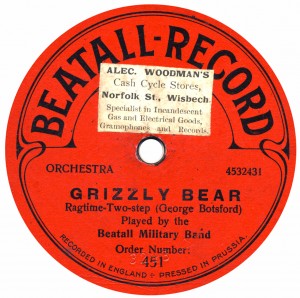
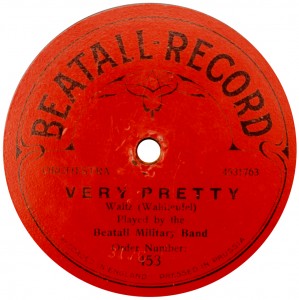
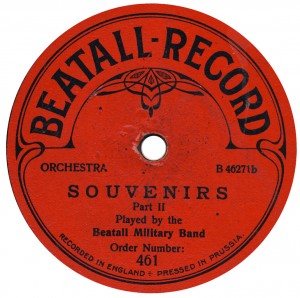
| A rare label. It is believed that the proprietor was a dealer named Lloyd Thomas. They date from about 1913 & 1914. Several sources of masters are known: Bel Canto, Invicta, ILCO and Operaphone – all German concerns. Your attention is drawn to the oddity that the face number on the label is a combination of the catalogue number with the master number embedded in it. E.g. on Beatall 451, we have cat no. 451 and master 3243 and end up with: 4532431. The source of master 3243 is not known to us; but if there was a composite number like 4551996, the 5000 series number embedded in it would almost certainly indicate a Bel Canto master. | ||||
|
||||
 |
 |
 |
 |
 |
|
||||
 |
 |
 |
 |
 |
|
||||
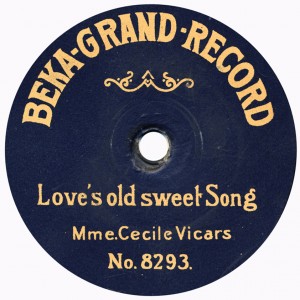
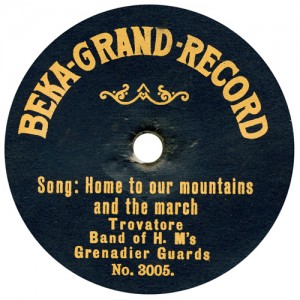
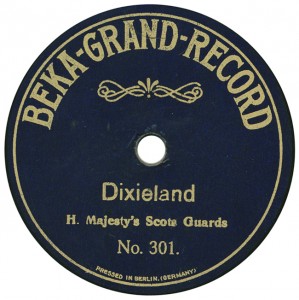
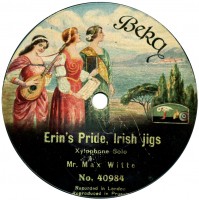
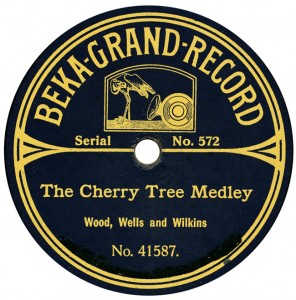
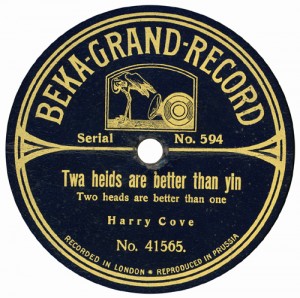
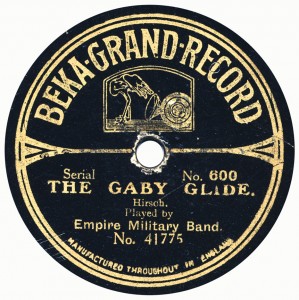
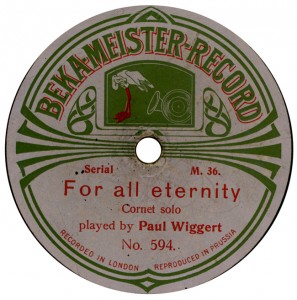
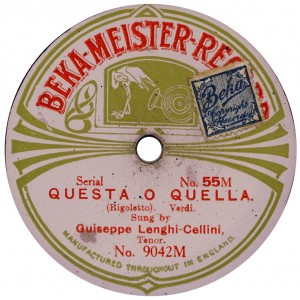
| Beka records were originally the product
of Bumb & König, a German company who had been involved with the German
side of International Zonophone. When The Gramophone Company bought Zonophone
in June 1903, in order to eliminate some of the competition, Bumb &
König decided to introduce their own record label and named it the Beka
Record (pronounced "Bay-Kah", which is the German phonetic pronunciation
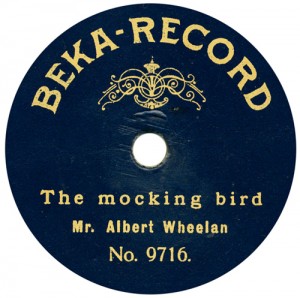
of the company's initials). This was in March 1904. The following year, in September, Beka sent recording engineers to London to record matrices there. The exact location of the recording rooms are not known at present, but were believed to be in Islington, London. The first advertisement of Beka records for sale in Britiain was in November 1905. They would have been 8" records, and possibly both single & double sided were available. By January 1906 they were advertistng: 8" Beka Records, single-sided (at 1/9) and double-sided (2/6) 10" Beka Grand single sided (2/6) and double sided (4/-); these had G- prefixed face numbers 11" Beka Symphonie single sided (3/-) and double sided (4/3). None of the double-sided records had "catalogue" numbers, i.e.numbers common to both sides. By the following year, in April 1906, they had added a 7" Beka Record at 1/- (single sided) or 1/6 (double sided). The other styles were reduced slightly in price so that the 8" were now 1/3 and 1/10; the 10" 2/- and 3/-, the 11" 2/6 and 3/9. In January 1907 Beka Meister records became available in Britain. These were 12" records, double-sided, selling for 6/6 each.Up to this point, Beka were using a common series of master numbers for all sizes and recording venues, but in May 1907 they introduced different series depending on the place of recording and, in some cases, on the record size. Hence the British masters were allocated a 40000- series, which was mainly used on the 10" Beka Grand records, but also on the 12" Beka Meister records; the numbers were prefixed G for 10" and M for 12". (I don't know about the 7" & 8" records). Catalogue numbers common to both sides were still not being used. In September 1908, the London office of the Beka agency of Otto Ruhl Ltd moved to bigger premises at 77 City Road London E.C.. This was a four-story building with the recording rooms on the top floor. It was in October 1909 when the company started issuing records with catalogue numbers common to both sides. The first Beka Grand record so numbered was No. 216 and all the previously issued records in the catalogue were given numbers from 1 to 215.In August 1910, the Beka business was bought out by Carl Lindström AG; the highest pre-Lindström issues being Beka-Grand 322 and Beka-Meister M25. Linsdström immediately dropped the other sizes (in fact they may already have been discontinued by this time, though it is known that some of the early 8" Beka records had already been doubled-up with catalogue numbers of X-1 to X-27). It is likely that with the acquisition of the company by Lindström, the labels were redesigned to the more familiar styles including the logo of the stork-and-horn and the place of manufacture. By October 1911, the British Beka-Meister masters were being numbered in a 9000 series, leaving the 40000 range for the 10" Beka-Grand only. In the Spring of 1912, the 40000 London master numbers reached 41999 and the company started a new series at 35000, which continued in use until about 1919 by which time they had reached well into the 36000s.In late 1912, a British factory was being built for manufacturing Lindström-owned records, all of which had previously been manufactured in Germany. It was called The Mead Works, and was in Gas House Lane, Hertford and it opened in December 1912. By the time it was fully operational in March 1913, they report making 50,000 records a day (oh, yeah?). These would include not only Lindström's Beka, Coliseum & Scala records, but also Fonotipia's Jumbo and Odeon records, as Lindström had taken over the Fonitipia concern by this time. Despite the new factory in England, many Lindström-owned records were still made in Germany, where employment costs were lower.The outbreak of World War I had little effect initially on Lindström's London business, other than they could not longer get German-recorded masters, and had to make all of the records at Hertford, but in the summer of 1916, the Board of Trade started taking action under the new "Trading with the Enemy" acts to reorganise the company and turn it iinto a wholly-owned British Company. With financial capital from the newly-created Columbia Graphophone Company, Carl Linström Ltd was "ousted" and it became The Hertford Record Company (owned by Columbia), though the personnel in the factory apparently remained the same, with Otto Ruhl on the management team. It was at this point that the Beka name on records was dropped due to its German associations, and the Jumbo records were renamed "Venus". One of the UK directors, Otto Heinemann, had left Britain in 1914 to start a new record company in America, which later issued the famous Okeh records.A postscript to this story is that in the early 1920s a UK Beka catalogue was produced. It was undated but may have come from Otto Ruhl (1922) Ltd and could have just pre-dated the reappearance of Lindström-owned records with the new Parlophone Label in Auntumn of 1923. This Beka catalogue contained no new UK recordings, but consisted mainly of German masters dating from the outbreak of WWI up to about 1920, issued on Beka (10") and Beka Meister (12") records.I am very grateful for the research done over the years by Frank Andrews and Bill Dean-Myatt which has enabled me to produce the above narrative. Frank and Bill's full story of Beka/Lindstrom can be read in a booklet produced by the CLPGS (Reference Series RS11), which also includes a full listing of known issues on a data CD. |
||||
|
||||
 |
 |
 |
 |
|
| |
||||
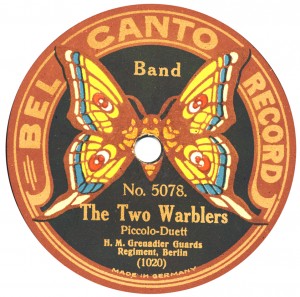
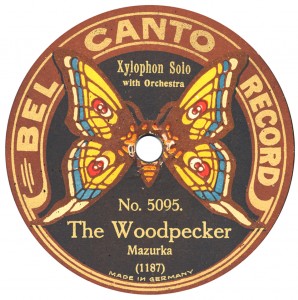
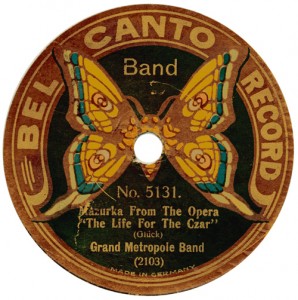
| A very attractive pre-WWI label, the company was established in Germany in 1909, but in 1911 J.G. Murdoch started importing the records into England. Bel Canto recorded their own masters, but the label, which is fairly scarce, also used other company's masters, including, apparently Dacapo and some made specifically for Murdoch. | ||||
|
||||
 |
 |
 |
 |
 |
|
||||
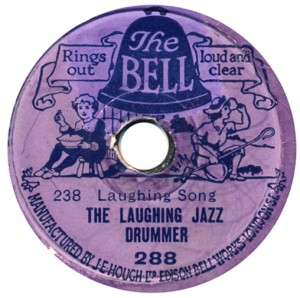
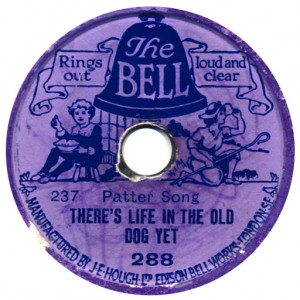
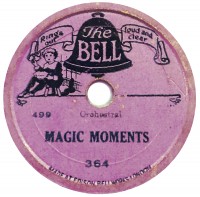
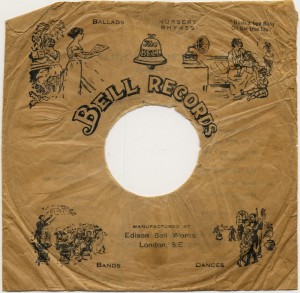
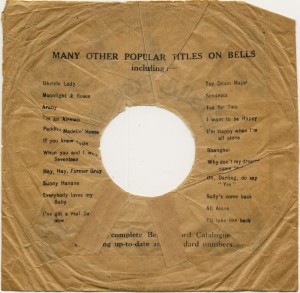
| In the 1920s, Edison Bell revived the Bell name for their 5½" (later 6") children's label. Catalogue numbers started at 250 in 1921 and the label survived until 1926 by which time the numbers had reached into the 400s. An Export series using catalogue numbers starting at 700 was also produced, with many sides specially recorded for France or Belgium. Dance band items specially recorded for the format may be found. All issues are British recordings. 6" recordings continued to be issued after this time by Edison Bell, but were issued on the Crown label. | ||||
|
||||
 |
 |
 |
 |
 |
|
||||
 |
 |
 |
||
|
||||
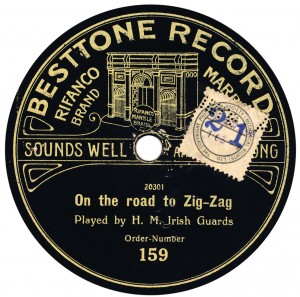
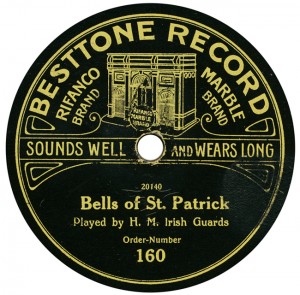
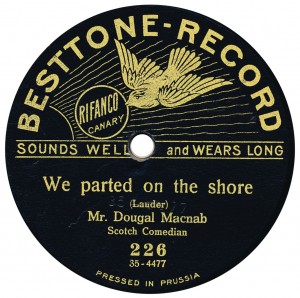
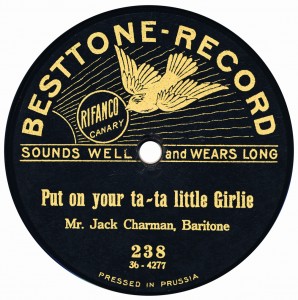
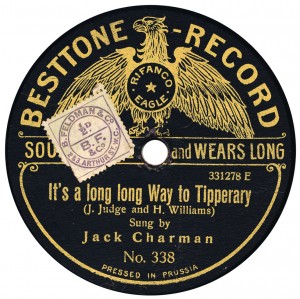
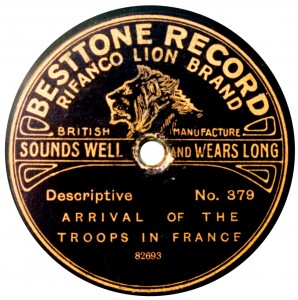
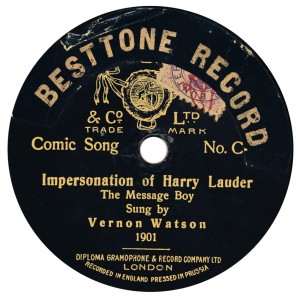
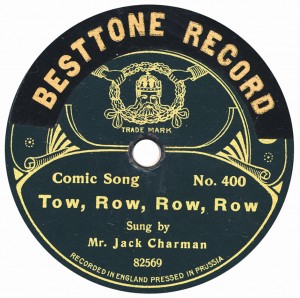
| Besttone records were
available in between 1912 and 1916 and could be bought from the Regent Wave
Company of 120 Old Street, London, owned by Leon Liebowich. On this label
may be seen the name "Rifanco Eagle". It is not known what Rifanco
means or refers to, but the needles and gramophones available from Regent
use the name too. Other label designs show the Rifanco Canary, Rifanco Marble
and Rifanco Lion, as well as just Rifanco Brand The Besttone name was also used by the company as paste-over stickers on other record labels These were old stock sold by Regent; known examples are records previously sold by J. Blum & Co., such as Diploma & Pelican, following the liquidation of Blum & Co. in July 1915. |
||||
|
||||
 |
 |
 |
 |
 |
|
||||
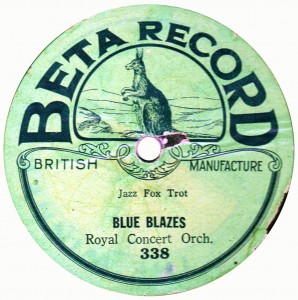
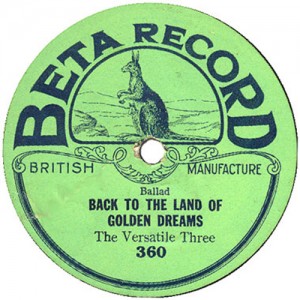
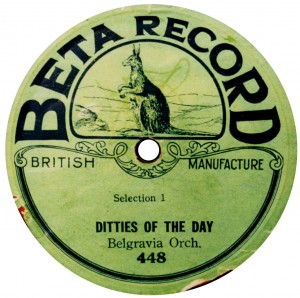
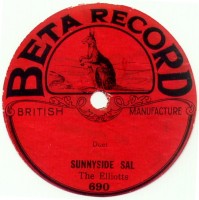
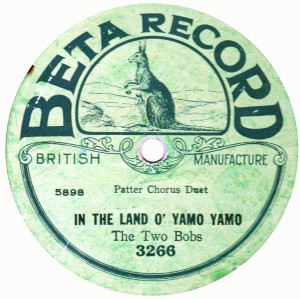
| Beta Records: These labels are over-stuck on Edison Bell Winner records, destined, rather obviously, for the Australian market. They carry the correct artiste credit. Winner 3266 was issued in January 1919, and the Beta used the same number. The others use the last three digits of the Winner catalogue number. ‘Blue Blazes’ was on Winner 3338 of September 1919, and The Versatile Three was on Winner 3360 in January 1920. It is rather likely that these were surplus ‘old stock’ Winners sold off to an entrepreneur who had the labels made. If so, Beta records may date from circa 1922. | ||||
|
||||
 |
||||
|
||||
 |
 |
|||
|
||||
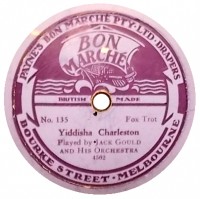
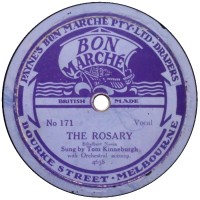
| Manufactured in or near Tonbridge, Kent, by Crystalate for Payne’s ‘Bon Marché’ Drapers store, Bourke Street, Melbourne. The discs are scarce, even in Australia. Jack Gould is a pseudonym for Geoffrey Gelder’s Kettner’s Five. Though recorded in December 1926, it is still a mechanical recording; Crystalate did not adopt the electrical system until 1927 – probably the last company to do so. ‘The Rosary’, actually by the celebrated Scottish bass Tom Kinniburgh, was recorded 16th March 1927, and first appeared on Imperial 1746. | ||||
|
||||
 |
 |
 |
||
|
||||
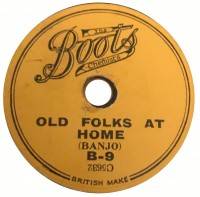
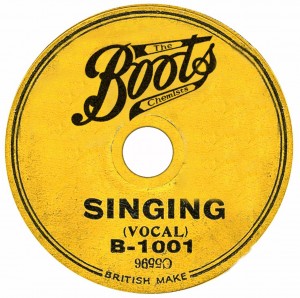
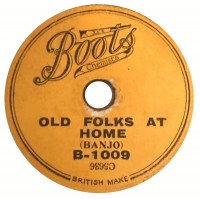
| In about 1922, Boots the Chemists, a manufacturing chemical company who also had (& still do) a huge nationwide chain of pharmacies, had records made for them by the Universal Music Company – often loosely referred to as ‘Vocalion’. They were small discs, and came in two sizes: 5.375" (13.5cm) and 6.5" (16.5cm). It is not known which came first. 6.5" is a most unusual diameter for ‘mini-discs’; possibly unprecedented. They were double sided. They are hardly ever seen, so the venture probably didn’t last very long. Indeed originally, the very few known, all had the Boots logo defaced, and this gave rise to the theory that they may never have been put on sale, and may have been given out as ‘freebies’ once the Boots mark had been obliterated. | ||||
|
||||
 |
||||
|
||||
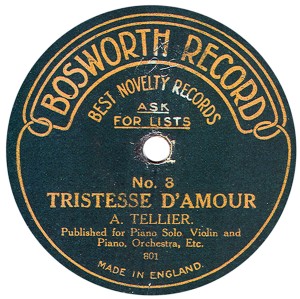
| Bosworth were music publishers. In order to promote their works, in about 1916 or 1917 they had records made for them. They were derived from the Guardsman masters of the Invicta Record Co., and were pressed by Crystalate. The label bears the slogan ‘Best Novelty Records – ask for list’. Few people can have done so, for this type of Bosworth record is incredibly rare. Whether or not the Invicta Co. recordings were custom made for Bosworth, or were simply derived from Bosworth publications already recorded by Invicta is not known. Surely the former would be more likely? This ‘Tristesse d’Amour’ was issued on Guardsman 769 as National Citizen Orchestra. Later, Bosworths had another label which acted both as a sampler for their scores, and also for ‘Library Music’. | ||||
|
||||
 |
||||
|
||||
| BOUWMEESTER:
The proprietor was Louis Bouwmeester (1884-1931). He was a Dutch actor,
but also very much involved in producing revues, and was also the manager
of two theatres. One of them, in The Hague, was called The Scala. This is
probably why he chose the British Scala company to manufacture records for
him. Many of his issues featured artistes from his own revues and theatre
companies. They appeared in a 3000 series, with the same colour label as
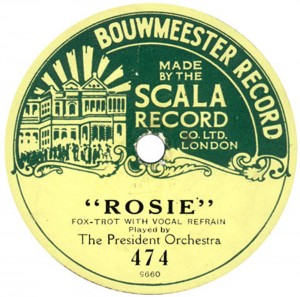
above. Their masters were in an AR-150 or 200 block. There was also a 12" (30cm) 6000 series; their labels were red on white, and their masters in an AR-1000 block. In addition, some material was supplied by British Scala from masters of their own, or masters they had leased, as in the case above: Bouwmeester 474 is the same as U.K. Scala 474.The band is Joe Coleman’s President Orchestra, recorded by Gennett in New York in early 1921. Jan tells us that Bouwmeester records first appeared in 1921. There was a two-way traffic in masters, for several sides by violinist Jacques Benavente, recorded for Bouwmeester, also appeared on the British ‘Scala Ideal’ label. The label is often referred to as ‘Bouwmeester Scala’, but to be pedantic for once, it is obviously just ‘Bouwmeester Record’; the prominence given on the label to the word ‘Scala’ doubtless accounting for its being ‘rolled into’ the name. More images, including the 3000 and 6000 series may be seen at: https://www.discogs.com/label/1005829-Bouwmeester-Record |
||||
|
||||
 |
 |
 |
 |
 |
|
||||
 |
 |
 |
 |
|
|
||||
 |
||||
|
||||
 |
 |
 |
 |
 |
|
||||
 |
 |
 |
 |
 |
|
||||
 |
 |
|||
|
||||
 |
 |
 |
 |
|
|
||||
 |
 |
 |
 |
 |
|
||||
 |
 |
 |
 |
|