LONDON
Machine-test Sleeve
From
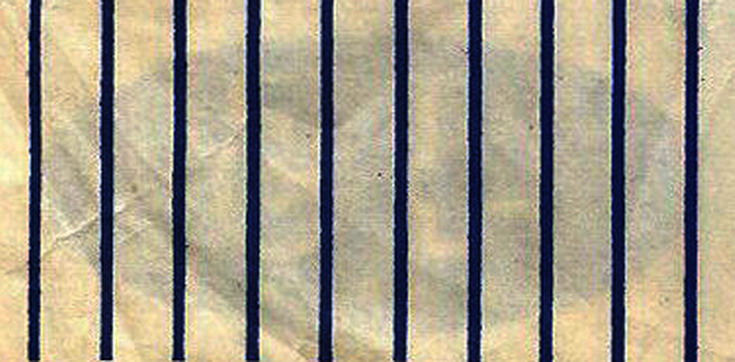
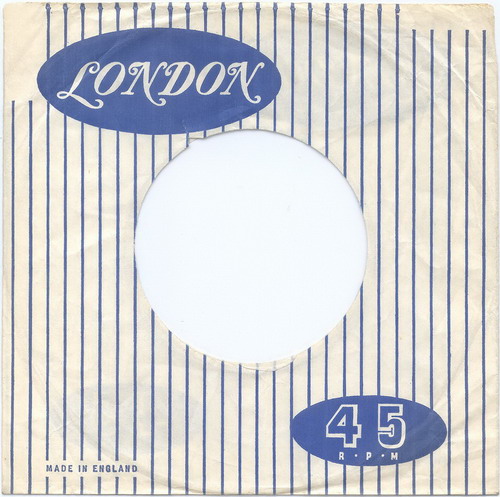
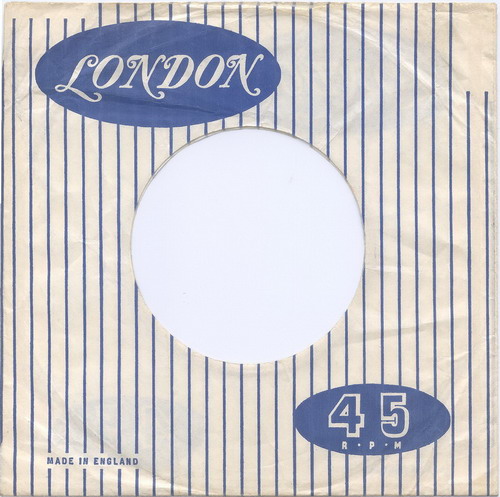
a collector in Bristol, UK: In the early 60s, the father of a fellow apprentice worked at a company in Bristol that made special purpose machines. At the time, 1961, they had a contract for a machine to print, cut, fold and glue 45 rpm record sleeves. As part of the machine proving process they did print runs of thousands of white London sleeves which were consigned to the waste skip. Some fell out of the skip and were carried by the wind onto my 45s. Paper They used various papers for trials and the ones I was given have a slightly waxy finish on the printed side which was unlike the normal London white sleeves which were usually matt or nearly so. The test sleeves have a straight cut top (NOT slightlly curved as no 8) and are inside glued. The paper measures 0,08 mm thick with my digital vernier caliper which is 60 gsm and seems thinner than usual because it is slightly transluscent. At first glance they have a 'hard' appearance when compared to normal London sleeves. I did a quick check of some normal sleeves and they are 0,08- 0,09 thick. Artwork/colour The artwork is like no 8, with 45 oval with thick shading spanning 8 blue lines but the blue printing is lighter. From experience in book printing it is a fact of life that colour can vary during a large print run depending how attentive or lazy the machine operator was at replenishing the ink. ... These test sleeves were not sold with records through the trade but no doubt there are more than a few surviving in the Bristol area so you might come across one. |
|||
| |
|
|
|
 |
 |
 |
Oval covers 8 lines (as London no 8) 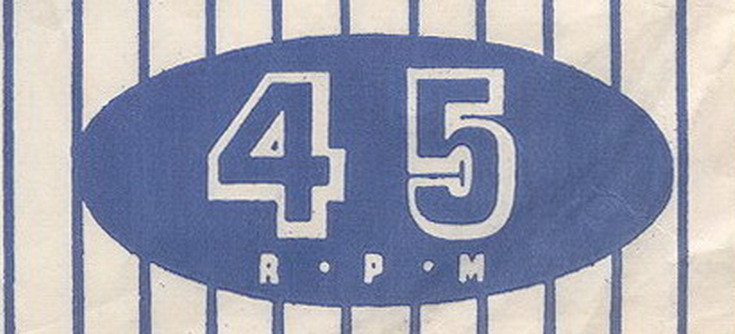
|
| Cut straight | Inside glued | ||